

Your office says something about your business before anyone in it does. Clients read it, candidates read it, and your own team reads it every day. The modern vs classic office design question is not about which style is better — both work — but about which one tells the truth about how your business operates.
Here is how the two compare across the decisions that actually matter, and how to choose without ending up somewhere in between by accident.
What Each Style Actually Means
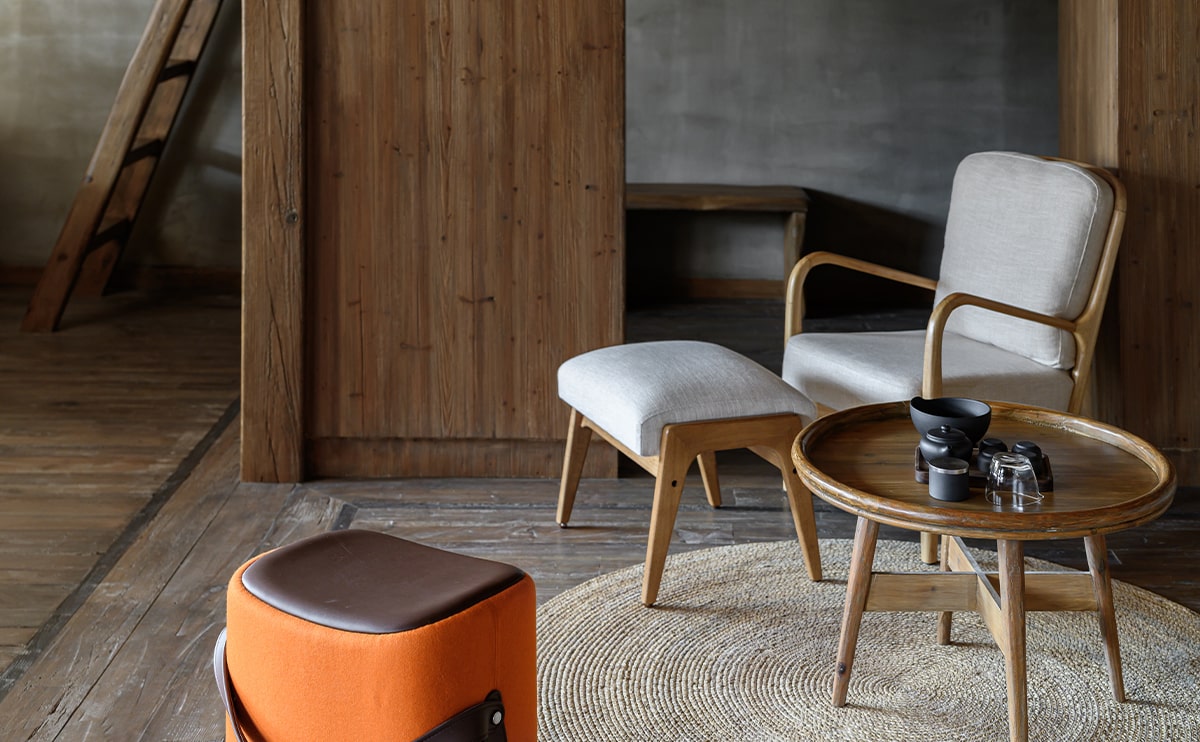
Modern office design uses clean lines, minimal ornament and open sightlines. Materials skew toward light woods, powder-coated steel, glass and matte finishes. Furniture sits on visible legs so floor is continuous under the eye. Storage is concealed. The palette is restrained, with color used as accent rather than field. The overall impression is lightness, flexibility and openness.
Classic office design uses richer materials, defined proportions and a sense of permanence. Dark or mid-tone hardwoods, leather, brass or bronze hardware, panelled surfaces, considered symmetry. Furniture has visual weight and often sits closer to the ground. Bookcases are open and displayed rather than concealed. The impression is stability, authority and continuity.
Both are legitimate. Neither is inherently more professional.
Match the Style to What You Sell
The useful question is not what you like. It is what your clients need to believe about you.
Modern generally suits:
- Technology, software and digital services
- Creative agencies, design studios, media
- Startups and scale-ups
- Coworking and flexible workspace operators
- Consumer brands positioning as contemporary
- Any business whose value proposition includes agility or innovation
Classic generally suits:
- Law firms, accountancy practices, notaries
- Wealth management, private banking, insurance
- Medical and dental practices at the premium end
- Family businesses with a long history
- Luxury goods, bespoke services, heritage brands
- Any business whose value proposition includes discretion, permanence or trust
The logic is straightforward. A client choosing a wealth manager is buying reassurance that this firm will still be here in twenty years. Heavy timber and considered proportion communicate that instinctively. A client choosing a design agency is buying originality and responsiveness, which minimal contemporary furniture communicates better than a mahogany partners’ desk ever will.
If your office style contradicts your positioning, visitors notice — usually without being able to articulate why the room felt slightly off.
Practical Comparison
| Factor | Modern | Classic |
|---|---|---|
| Initial cost | Wide range; strong options at moderate budgets | Higher, particularly for solid hardwood and leather |
| Reconfiguration | Easy; modular systems designed to move | Difficult; pieces are large, heavy and fixed in character |
| Maintenance | Low; matte and laminate surfaces are forgiving | Higher; timber and leather need periodic care |
| Space efficiency | Higher; slim profiles, visual openness | Lower; substantial pieces need substantial rooms |
| Dating risk | Trend-linked pieces can date within a decade | Ages slowly; can read as dated if not maintained |
| Lifespan | Good with commercial-grade specification | Excellent; often outlives the business |
| Small rooms | Works well; visually light | Struggles; can overwhelm |
| Acoustics | Hard surfaces reflect; needs added treatment | Soft materials and books absorb naturally |
Two entries deserve expansion.
Reconfiguration. If your headcount is likely to change substantially, modern modular furniture is the practical choice regardless of aesthetic preference. Classic furniture assumes the room is finished.
Acoustics. Minimal contemporary interiors are frequently noisy because there is nothing soft in them. If you go modern, budget for acoustic screens, upholstered furniture and soft flooring from the beginning rather than as a remedial fix.
Blending the Two Without It Looking Confused
Most successful offices are not purely one or the other. The trick is having a clear rule rather than a compromise.
Rule 1: One style leads, the other accents. Pick a dominant register — say seventy percent modern — and use the other as deliberate punctuation. A single classic executive desk in a contemporary office reads as intentional. An even split reads as indecision.
Rule 2: Zone by function. Client-facing spaces can lean classic for gravitas while working areas stay modern for flexibility. This is common in professional services and works well, provided the transition is clear rather than gradual.
Rule 3: Hold the palette constant. Whatever the mix of shapes, keep to two or three materials and one consistent metal finish across the whole office. Consistency in material does more to unify a room than consistency in style.
Rule 4: Keep proportions consistent. A classic desk beside modern seating works if the visual weight is comparable. It fails when a heavy piece sits next to something visually light with nothing mediating between them.
Rule 5: Modernize classic, do not fake it. A contemporary desk in walnut with brass detailing reads as considered. A modern frame with applied decorative moulding reads as costume.
Making the Style Last
Both approaches can date badly. The failure modes differ.
Modern dates when it chases a specific trend — a particular chair silhouette, a saturated accent color, a finish that had a moment. Protect against it by keeping the permanent elements neutral and putting the trend into replaceable items: cushions, artwork, planters, seating fabric.
Classic dates when it is not maintained or when it is executed with cheap materials. Scuffed veneer, cracked faux leather and tarnished hardware read as neglect, not heritage. Real materials that develop patina age well; imitations of them do not.
The safest long-term strategy in either direction is to spend on the permanent, structural pieces in quiet, high-quality materials, and to express personality through items you can change cheaply.
A Short Decision Path
Answer these four questions:
- What do clients most need to believe about us? Innovation and speed, or stability and discretion?
- How often will this floor be reconfigured? Often points modern; rarely permits classic.
- How much natural light and floor area do we have? Constrained rooms favour modern’s visual lightness.
- What is our maintenance appetite? Classic materials reward care and punish neglect.
If three of the four point the same way, you have your answer. If they split, use the zoning approach: classic where clients sit, modern where work happens.
Stylo Furniture supplies both registers — contemporary modular office systems in light woods and powder-coated steel, and classic executive ranges in hardwood with traditional joinery — with material palettes designed to coordinate if you want to blend the two rather than choose between them.
Frequently Asked Questions
Which office style is more professional?
Neither. Professionalism is communicated by coherence and condition, not by style. A well-maintained modern office and a well-maintained classic office both read as serious; a mismatched or worn office of either kind does not.
Can I mix modern and classic office furniture?
Yes, with a clear dominant style, a consistent material palette and comparable visual weight between pieces. An even fifty-fifty mix rarely works.
Which is more cost-effective?
Modern typically costs less upfront and adapts more cheaply. Classic costs more initially but often lasts longer and needs replacing less often.
Which suits a small office better?
Modern. Slim profiles, raised furniture and light finishes make constrained rooms read as larger.