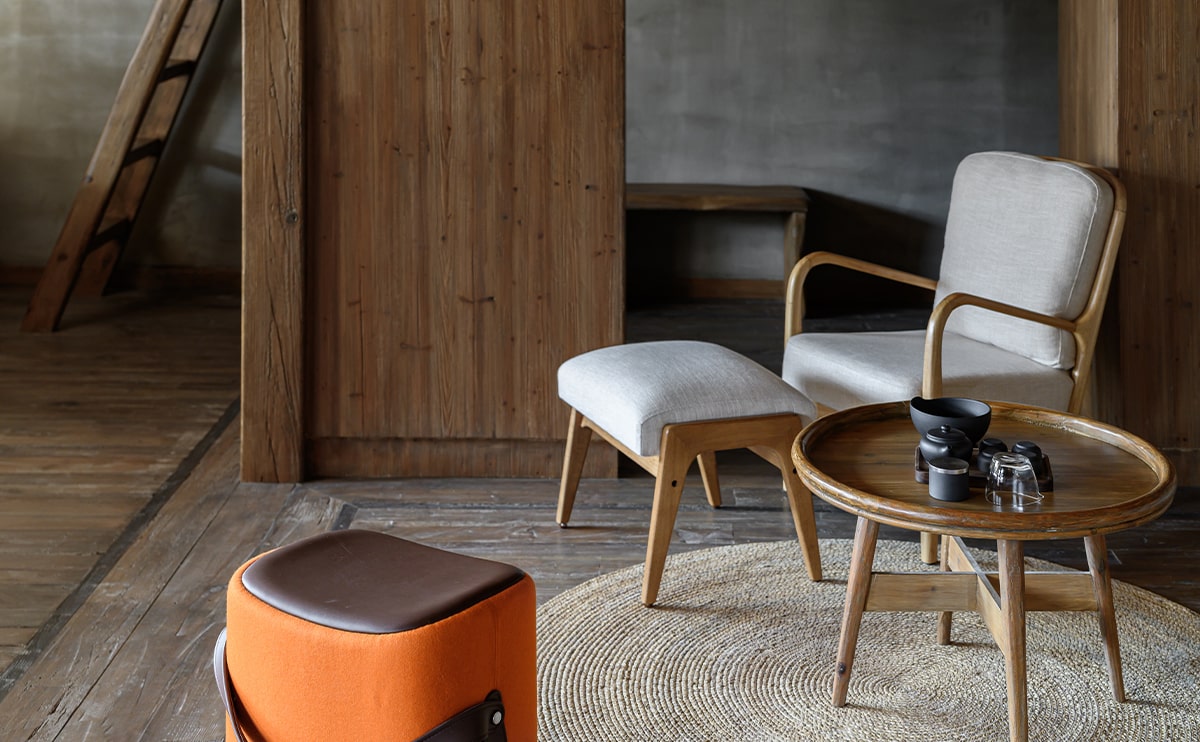


There is a moment in every beautifully designed interior when you feel it before you can explain it — a sense of rightness, of permanence, of care. The room simply feels different. The surfaces invite touch. The proportions feel balanced. The details, upon closer inspection, reveal an attention that most interiors never achieve. That feeling has a source: quality craftsmanship. In a world increasingly defined by mass production and disposable design, true craftsmanship stands apart — and the spaces it creates are transformed by it.
The Difference That Craftsmanship Makes
Craftsmanship is not simply about making things well. It is about making things with intention — with a deep understanding of materials, techniques, and the relationship between form and function. A craftsman-made piece of furniture is not just an object occupying space; it is an element that defines space, anchors a room’s character, and contributes to an atmosphere that no flat-pack alternative can replicate.
In contemporary interior design, where clean lines, open spaces, and deliberate material choices set the aesthetic agenda, the quality of individual pieces matters enormously. A single beautifully crafted item — a hand-jointed dining table, a bespoke cabinetry unit, a precision-upholstered sofa — can elevate an entire room, lending it a sense of substance and refinement that lesser pieces diminish rather than enhance.
Materials: The Foundation of Quality
At the heart of every craftsman-made interior piece is a thoughtful relationship with materials. Quality craftsmanship begins with the selection of materials that are not just visually appealing but structurally sound, durable, and appropriate for their intended use. Solid hardwoods with their natural grain and warmth. Hand-sourced marbles with their unique veining. Full-grain leathers that develop a rich patina over time. Textiles woven from natural fibers that breathe, drape, and age gracefully.
These material choices are not merely aesthetic — they are a commitment to longevity. A well-crafted piece made from quality materials does not need to be replaced in five years. It deepens in character over decades, becoming more beautiful with age rather than less. In contemporary spaces that prize authenticity and sustainability, this quality of endurance is increasingly valued — and increasingly rare.
The Art of Joinery and Construction
In furniture and interior woodwork, the quality of construction is most honestly revealed in the details that casual observation overlooks. Dovetail joints that lock together with mechanical precision, requiring no nails or glue to hold their integrity. Mortise-and-tenon connections that distribute stress evenly across a structure, ensuring stability over generations of use. Hand-fitted drawer runners that glide silently with a solidity that machine-produced equivalents cannot match.
These construction techniques are not archaic traditions preserved for nostalgia’s sake. They are engineering solutions refined over centuries of practice — proven to produce furniture and architectural elements of superior structural integrity. In contemporary interiors, where design sensibility increasingly favors honest expression of materials and construction, the visibility of quality joinery becomes a design feature in its own right.
Bespoke Design: Spaces Tailored to Life
One of the most transformative aspects of quality craftsmanship in contemporary interiors is the ability to create pieces that are precisely tailored to a specific space and a specific way of living. Off-the-shelf furniture, however well designed, is made for a generic customer in a generic room. Bespoke craftsmanship begins with a conversation — about the space, the light, the proportions, the lifestyle, and the aesthetic vision — and produces something that could exist nowhere else.
A built-in library that uses every centimeter of an awkward wall, turning an architectural challenge into a dramatic focal point. A kitchen designed around a specific collection of cookware, a particular style of cooking, and the exact dimensions of a heritage-listed room. A bedroom wardrobe system that maximizes storage without compromising the spatial flow of a meticulously designed suite.
When craftsmanship is applied in service of bespoke design, interiors achieve a coherence and personalization that transforms them from beautiful spaces into truly inhabited ones.
Texture, Finish, and the Sensory Experience of Space
Contemporary interior design has moved decisively beyond the purely visual. Today’s most compelling interiors engage all the senses — and quality craftsmanship is central to this sensory richness. The tactile pleasure of a smoothly planed timber surface. The acoustic quality of a well-constructed room, where solid materials absorb sound rather than reflecting it harshly. The visual warmth of hand-applied finishes that catch light differently at different times of day.
Machine-produced surfaces are uniform by definition — which is, paradoxically, their limitation. The slight variations inherent in hand-crafted finishes — the subtle undulation of a hand-plastered wall, the gentle irregularity of a hand-thrown ceramic tile floor — create the visual and tactile complexity that gives a space life. These are the qualities that photographs struggle to capture but that the body recognizes immediately upon entering a room.
Sustainability Through Longevity
In an era of growing environmental consciousness, quality craftsmanship offers one of the most compelling arguments for sustainable interior design: longevity. A craftsman-made piece that lasts fifty years represents a fraction of the environmental cost of five successive generations of mass-produced replacements. The energy, materials, and processes that go into one well-made object, used and loved across decades, make a far smaller demand on the planet than the churn of disposable design.
Contemporary designers and clients who are serious about sustainability are increasingly recognizing that buying less but better — investing in quality craftsmanship rather than accumulating volume — is one of the most meaningful sustainable choices available in interior design.
The Craftsman’s Legacy in Contemporary Aesthetics
Contemporary design has, in recent years, developed a deep appreciation for the visible hand of the maker. The handmade aesthetic — once eclipsed by the modernist love affair with industrial production — has returned with force, celebrated in the work of furniture designers, ceramicists, textile artists, and architectural craftsmen who are shaping the visual language of contemporary interiors.
This is not a retreat into nostalgia. It is a sophisticated understanding that the most compelling contemporary spaces are those that balance the precision of modern design thinking with the warmth, individuality, and material honesty that only genuine craftsmanship can provide. The contemporary interior that endures — that feels relevant not just this season but for decades — is almost always one in which quality craftsmanship has played a defining role.
Investing in Craftsmanship Is Investing in Space
For homeowners, interior designers, and developers who care about the quality of the spaces they create, the investment in quality craftsmanship is one of the most rewarding they can make. Not only in financial terms — though well-crafted interiors consistently command premium value in the property market — but in the daily, lived experience of inhabiting spaces that have been made with care, skill, and genuine love of the craft.
Quality craftsmanship does not merely furnish a space. It transforms it — giving it character, depth, and a sense of permanence that resonates with everyone who enters.
In a world of surfaces, craftsmanship creates depth. In a world of the temporary, it creates the enduring. The spaces that truly move us are almost always the ones where someone cared enough to make something well.